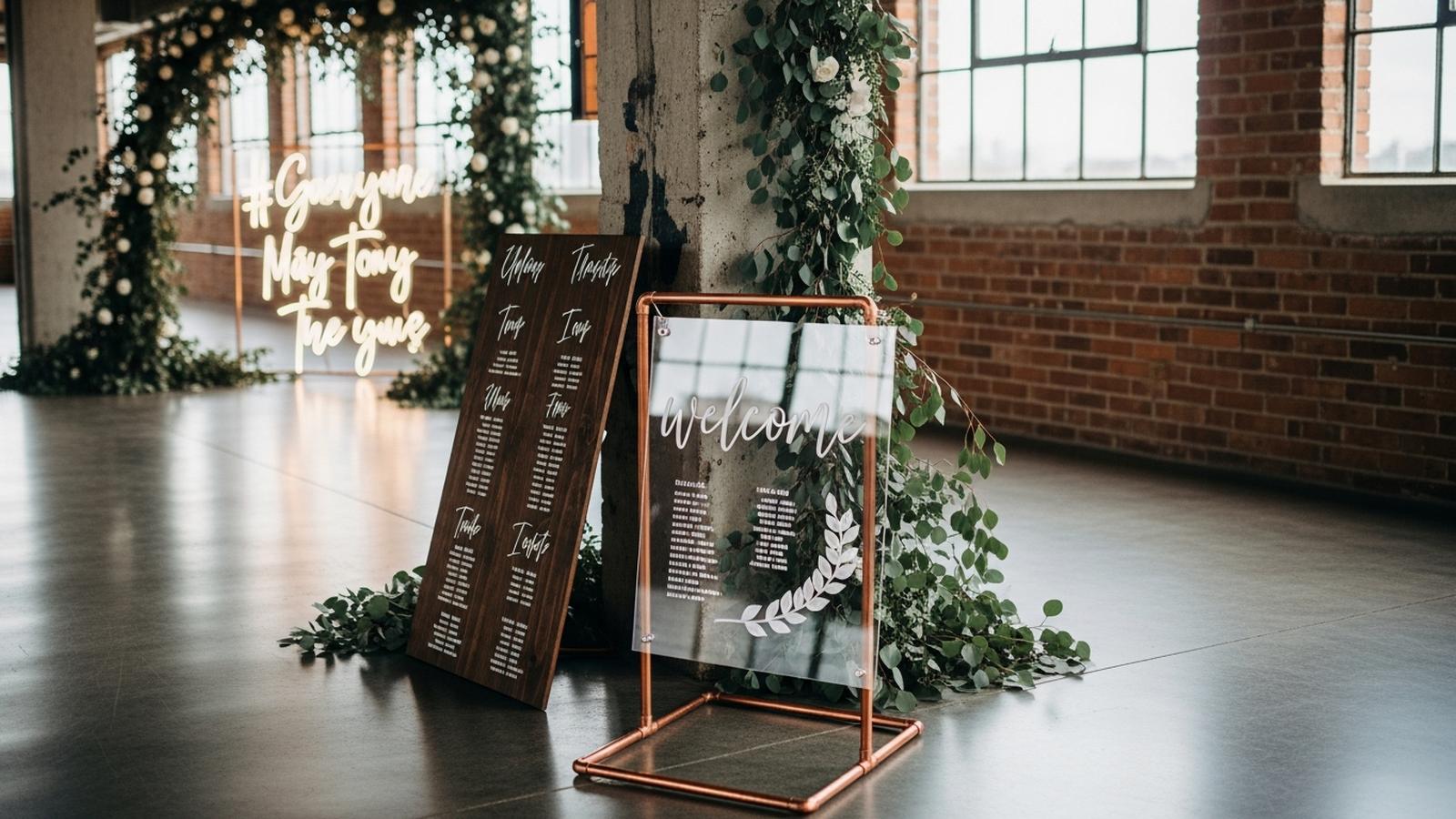
The Art of Wedding Signage
In my 12 years of manufacturing custom wedding signage at Chicago Factory, I learned that a sign is never just a sign. It's the first handshake between your wedding and your guests. The welcome sign at the entrance sets the tone. The seating chart solves a logistical problem while looking beautiful. The bar menu becomes a conversation piece.
From a designer's perspective, the material you choose—whether it's clear acrylic, warm wood, or electric neon—speaks volumes about your aesthetic before anyone reads a single word. This archive is dedicated to helping you make that choice with confidence.
Materials That Define Modern Weddings
- Acrylic & Glass Clean lines, transparency, modern minimalism. Perfect for letting your venue architecture shine through.
- Wood & Timber Warmth, texture, organic beauty. The bridge between rustic and industrial.
- Neon & Light Drama, photography gold, unforgettable focal points. The statement piece of any reception.
Explore Our Signage Guides
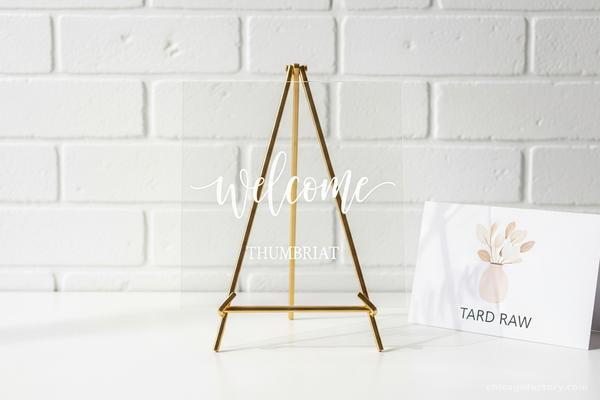
Acrylic Welcome Signs
The clear choice for modern ceremonies. Thickness guides, painted-back trends, and styling tips. Read the Guide →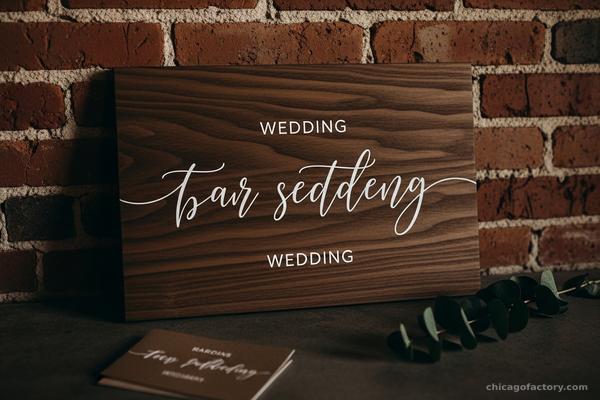
Rustic Wood Signage
How to balance warm timber with industrial brick. Material selection and staining techniques. Read the Guide →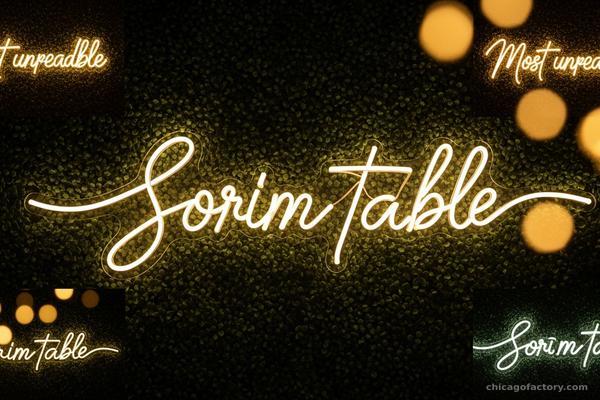
Neon Wedding Decor
From photo booth backdrops to bar headers. LED flex vs. glass, installation tips, and phrase ideas. Read the Guide →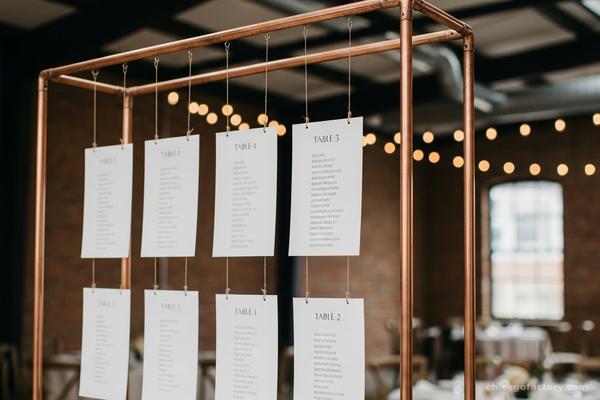
Seating Chart Ideas
Architectural displays that solve logistics beautifully. Formats, layouts, and material pairings. Read the Guide →
Wedding Sign Wording
What to write on every sign—from welcome to unplugged ceremony. Templates and typography rules. Read the Guide →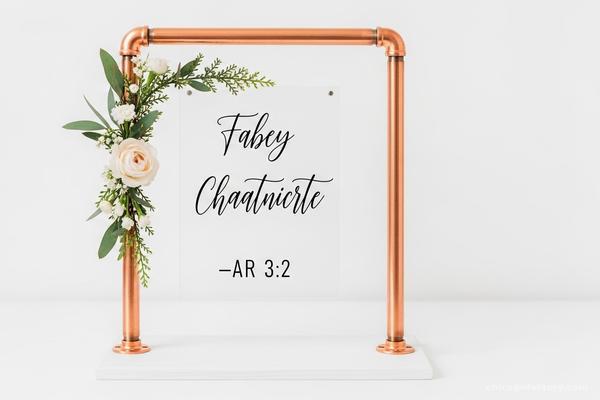
Easel & Stand Styling
The hardware matters. Copper pipe stands, iron easels, and how to secure heavy signage safely. Read the Guide →Choosing the Right Material for Your Venue
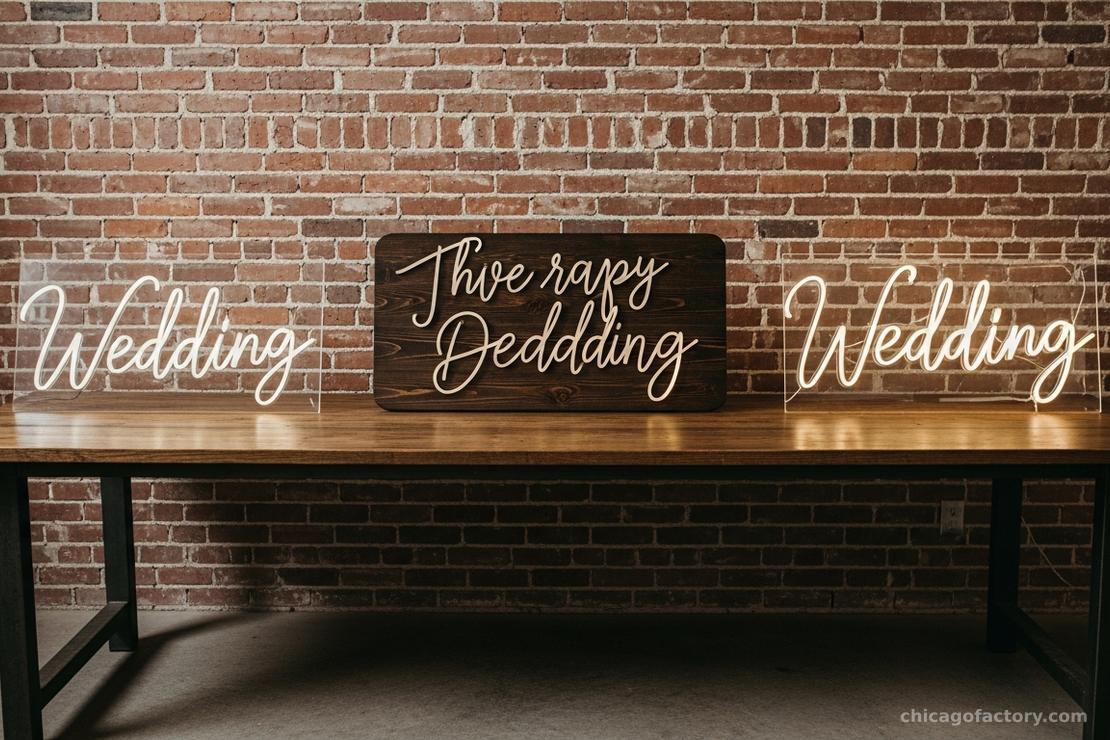
The venue dictates the sign. This is the principle I built my career on. A delicate calligraphy acrylic sign that looks stunning in a bright, airy greenhouse will disappear against the dark brick of a converted warehouse. Conversely, a heavy walnut wood sign can feel oppressive in a minimalist white gallery.
Quick Material Guide
- Bright, airy venues (greenhouses, white tents): Acrylic with bold black or gold lettering. The transparency works with the light.
- Dark, moody venues (warehouses, factories): Wood with white calligraphy OR neon. You need contrast to stand out.
- Mixed industrial-romantic (lofts with big windows): Mix materials. Acrylic welcome sign + wood bar menu + neon photo backdrop.
For a deeper understanding of how to balance textures throughout your venue, explore our Venue Styling Guide. The principles that apply to furniture and draping apply equally to signage.
The Technical Side: What I Learned on the Production Floor
After cutting thousands of signs, I can tell you that the details matter more than you think. A 1/8" thick acrylic sheet will flex and warp in humidity. A wood sign without proper sealing will absorb moisture and crack. A neon sign with a rectangular backing box will catch glare in every photograph.
Throughout our guides, we share the technical specifications that separate a "craft project" from a "luxury installation." We want you to ask your vendor the right questions—because the structural integrity of your decor directly impacts your guest experience and your photography.
Questions to Ask Your Sign Vendor
- What is the thickness of the acrylic? (Should be 1/4" minimum for standalone signs)
- Is the wood sealed for outdoor use? (Critical for courtyard ceremonies)
- Is the neon LED flex or traditional glass? (LED is safer and cooler to touch)
- What type of backing does the neon have? (Cut-to-shape is better than rectangular box)
- Can you provide a stand or is that rented separately?
Beyond the Welcome Sign
While the welcome sign gets all the attention, don't overlook the supporting cast. A cohesive signage suite includes:
- Ceremony signs: Unplugged ceremony notice, reserved seating markers
- Reception signs: Bar menu, cards & gifts table, dessert display
- Wayfinding: Restrooms, parking, photo booth directions
- Personal touches: Guest book prompt, in loving memory tribute
The key is consistency. If your welcome sign is matte black acrylic with white script, carry that same combination through to your bar menu and table numbers. This repetition creates a "brand" for your wedding that feels intentional and curated.
For table-level signage that complements your welcome display, see our guides on Table Numbers and Minimalist Table Settings.
Frequently Asked Questions
For custom calligraphy or laser-cut signs, order 8-12 weeks before the wedding. This allows time for design revisions, production, and shipping. Rush orders are possible but often come with premium pricing and limited revision rounds.
Absolutely! DIY signage is a great way to personalize your wedding. For beginners, we recommend starting with a pre-cut acrylic blank and using vinyl lettering or paint pens. Our DIY section has tutorials on stamps and hand-lettering techniques that translate beautifully to signage.
For readability from 10+ feet away, a welcome sign should be at least 18x24 inches. The most popular size is 24x36 inches, which makes a statement without overwhelming the entrance. If your venue has a grand entrance hall, you can go larger (30x40"), but ensure your easel can support the weight.
They don't need to be identical, but they should feel related. Carry over one or two elements—the same script font, the same color palette, or the same material (if you used acrylic details on your invite suite). This creates visual continuity from the first touchpoint to the wedding day.
Need Help Choosing?
Our team has styled signage for hundreds of industrial weddings. If you're unsure which material or style fits your venue, we'd love to help. Reach out through our Contact Page or learn more about Our Story.