Raw & Refined: Concrete and Slate Table Settings
The Case Against Tablecloths
In my 12 years of designing tablescapes for industrial venues, I have watched the tablecloth slowly disappear—and I couldn't be happier about it. From a designer's perspective, draping a beautiful reclaimed wood table with polyester satin is like hanging a sheet over a vintage motorcycle. You are hiding the best part.
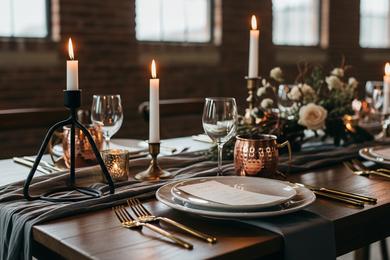
The modern industrial wedding celebrates raw materials. We don't cover; we curate. The grain of the wood, the cool touch of concrete, the matte edge of slate—these textures are the foundation of what we call "Industrial Romance." When you remove the tablecloth, you are not cutting corners; you are making a design statement.
The Foundation: Choosing Your Surface
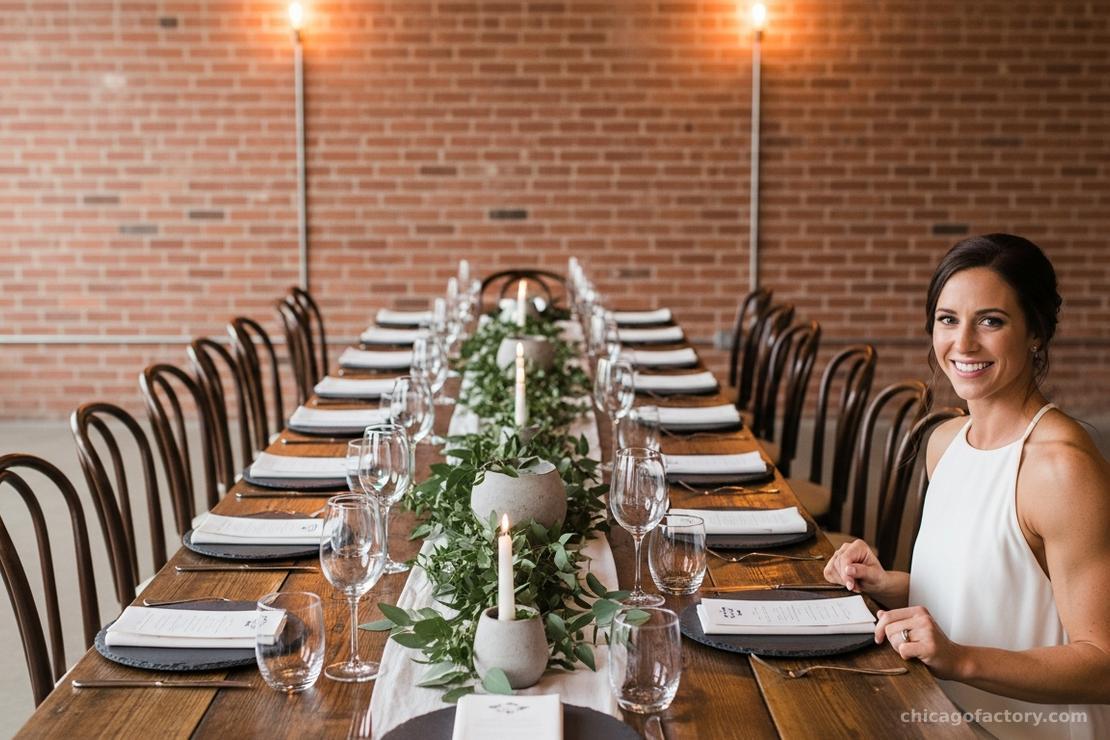
If you are going tablecloth-free, the table itself becomes the hero. Not every rental table is worthy of being seen naked.
- Reclaimed Wood Farm Tables: The gold standard. Look for tables with visible knots, natural weathering, and a matte finish. High-gloss lacquered tables reflect too much light and feel corporate.
- Raw Edge Walnut: For a more refined look, live-edge tables offer organic curves that contrast beautifully with geometric industrial architecture.
- Metal & Glass: If your venue already has exposed steel beams, a metal-framed table with a glass top creates visual continuity. Just be aware that glass shows every fingerprint—budget for extra polishing time.
The Charger: Slate & Concrete
Without a tablecloth to define each place setting, the charger plate does the heavy lifting. Forget the gold beaded chargers of the 2010s. For a loft wedding, we need texture that anchors.
Slate Chargers
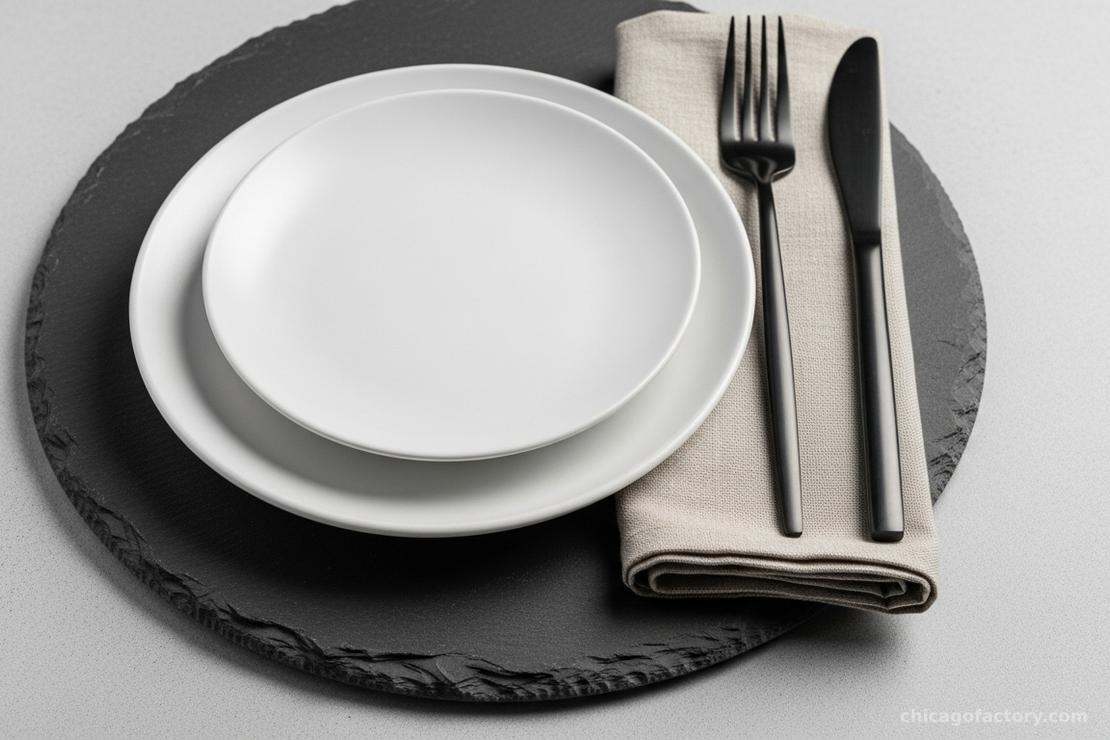
Natural slate is stunning because no two pieces are identical. The dark grey surface creates high contrast with white dinner plates and makes food pop. Stylist tip: slate is also functional—you can write table numbers or guest names directly on the surface with a chalk pen, eliminating the need for separate place cards.
Concrete Rounds
For a softer, more architectural look, concrete chargers are emerging as a design-forward choice. They are heavier (which means they stay put), and the slight texture variation gives each setting a handmade quality. Pair them with matte flatware for a cohesive industrial feel.
Centerpieces: Concrete Planters & Bud Vases
When the table is this minimal, your centerpieces need to be sculptural, not sprawling. Forget the overflowing floral clouds—we are working with negative space here.
Concrete bud vases in varying heights create an architectural skyline down the center of the table. Fill them with single stems—a spray of eucalyptus, a single protea, or dried pampas grass. The repetition of the vessels ties the look together without overwhelming the raw wood surface.
If you want to integrate metals, this is the moment. A copper or brass accent vessel mixed into the concrete grouping adds warmth. We break down how to balance these finishes in our Metallic Color Palettes Guide.
Flatware & Glassware: The Finishing Touch
The rule is simple: matte over shiny.
- Flatware: Matte black or brushed gold flatware reads as intentional. Polished silver can look like it was grabbed from a banquet hall supply closet.
- Glassware: Smoke-tinted or amber glass goblets add warmth and hide fingerprints better than crystal. If you prefer clear glass, choose a heavy-bottomed tumbler over a delicate stemmed wine glass—it matches the "weight" of the concrete and slate.
These details might seem small, but they are what separate a "stripped down" table from a "designed" one. As I always say, the structural integrity of your design is in the details.
Napkin Styling Without a Cloth
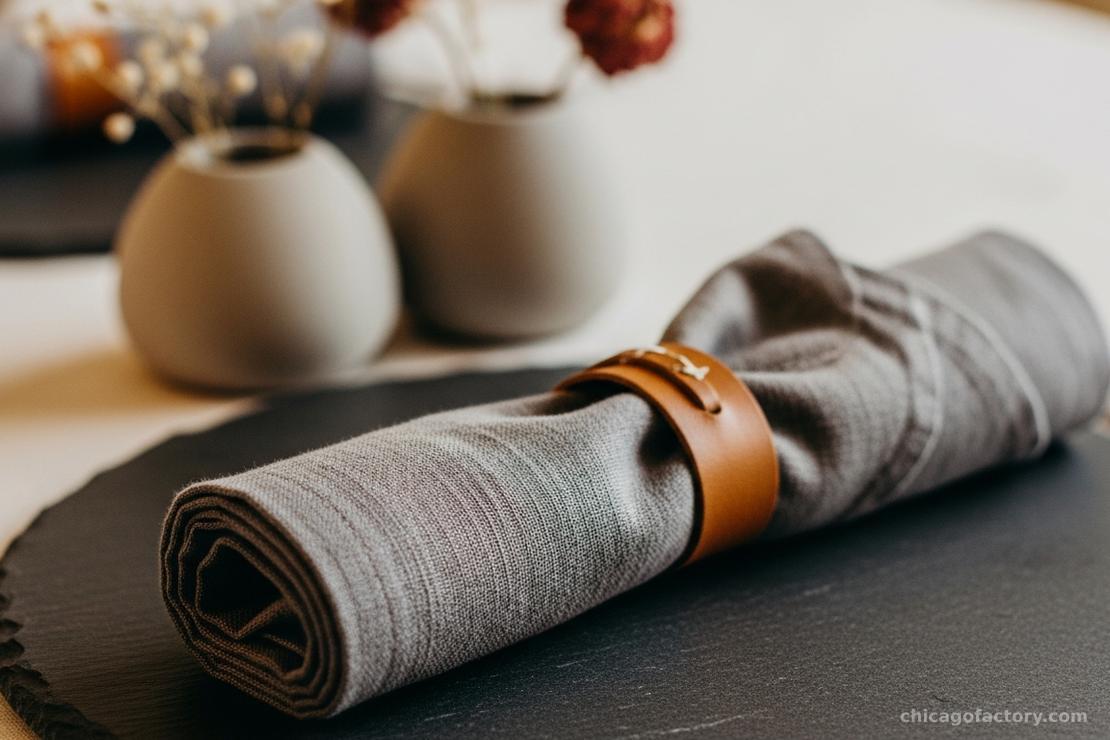
When there is no tablecloth to anchor linens, your napkin placement becomes a focal point. I recommend organic, textured fabrics—raw linen or cotton gauze in neutral tones like stone, charcoal, or terracotta.
Skip the elaborate folds. A simple, casual roll tucked beside the plate or draped across the charger feels effortlessly elegant. If you are adding napkin rings, choose materials that echo your palette—leather bands, copper wire, or even a sprig of rosemary tied with twine.
This layered approach works beautifully with the table number designs we explore in our Chic Table Number Ideas. The key is consistency across every tactile element.
Protecting the Table
A practical note from my production days: raw wood is porous. Red wine, candle wax, and oily dressings will leave marks.
If you are renting your tables, ask your vendor about their damage policy. Many couples opt for a protective runner—a narrow strip of gauze, velvet, or even leather—down the center of the table. It's not a tablecloth, but it does provide a landing zone for candles and shared platters without sacrificing the exposed wood aesthetic on the outer edges.
Frequently Asked Questions
Some spillage is inevitable. Request that your caterer uses coasters under water glasses and provides small bread plates. Most high-quality farm table rentals are sealed with a water-resistant finish, so minor spills wipe up easily. Just avoid leaving wet glasses sitting for hours.
It can actually be cheaper. You save on tablecloth rentals and laundering fees. However, you may pay more for quality tables that are "show-worthy." The cost usually balances out, with the added benefit of a more unique aesthetic.
Texture and lighting. Incorporate soft linen napkins, warm-toned candles (amber glass votives are perfect), and clusters of greenery. The rawness of concrete and slate is balanced by the organic warmth of wood and candlelight. It's all about contrast.
About the Author