Softening the Edge: How to Style a Warehouse Wedding Venue
The Challenge of "Cold" Spaces
In my 12 years of designing for the Chicago event industry, I have seen the warehouse wedding evolve from a budget necessity to a luxury standard. However, the architectural reality of these spaces—concrete floors, steel trusses, and exposed ductwork—presents a unique challenge. Without intentional styling, a warehouse can feel cold, echoing, and impersonal.
The goal of "Industrial Romance" is not to hide the grit, but to balance it. From a designer's perspective, successful venue styling relies on juxtaposition. We use soft textures to highlight the hard edges, creating a space that feels curated rather than unfinished.
Lighting as Architecture
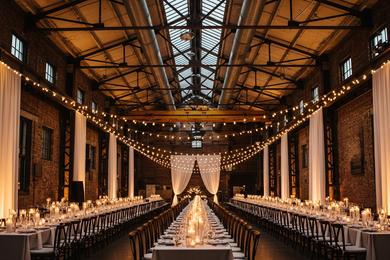
In a venue with 20-foot ceilings, lighting is your most powerful tool for manipulating space. High bay windows are beautiful during the day, but at night, a dark ceiling void can make guests feel small and exposed.
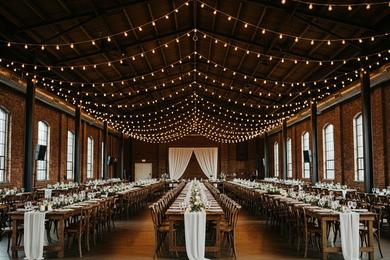
We need to visually lower the ceiling. Stringing cafe lights or Edison bulbs in a grid pattern creates a "false ceiling" of light, making the room feel intimate without sacrificing the grandeur of the space. For specific layouts that work with steel beams, reference our guide on Industrial Lighting Ideas.
Fabric & Draping
To soften the acoustics and the aesthetic, you need fabric. But be careful—too much satin can look dated. I recommend using sheer chiffon or voile.
- The Divider: Use floor-to-ceiling drapery to section off the ceremony area from the reception. It builds anticipation.
- The Beam Wrap: If the support columns are rusted or unsightly, wrapping them in greenery or fabric turns a structural eyesore into a design feature.
- The Table: Don't let the table legs get lost. Using long, pooling table runners helps absorb sound and adds a vertical element of softness.
Furniture: The Art of Contrast
When selecting chairs and tables, you have two choices: blend in or stand out.
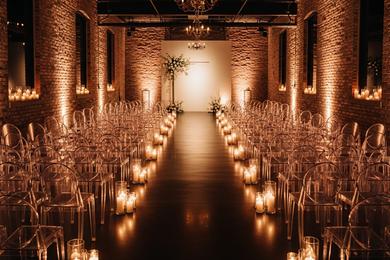
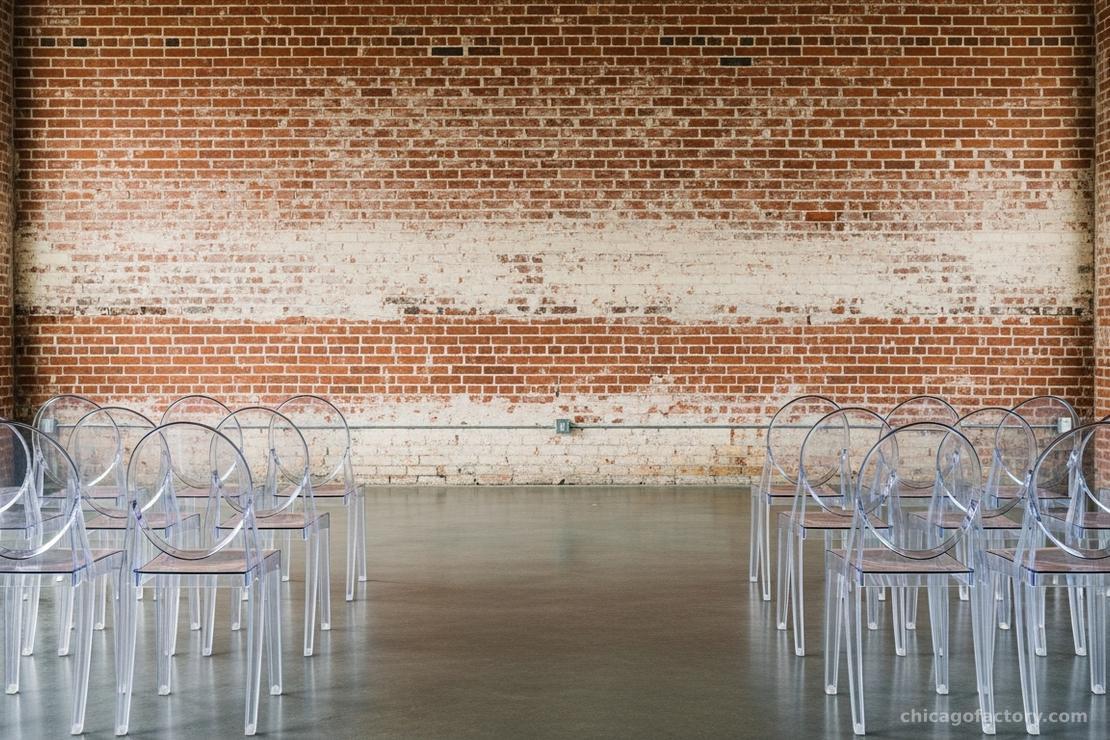
Wooden farmhouse tables blend with the "rustic" elements of the floor, creating a warm, monochromatic look. However, my personal preference for a modern loft is high contrast. Placing clear acrylic Ghost chairs against a red brick wall allows the texture of the brick to remain visible through the furniture. It’s a cleaner, more architectural approach. We break down the structural differences in our comparison of Ghost Chairs vs. Tolix.
Bringing Life to Concrete
An industrial venue is essentially a box of dead materials: stone, metal, glass. To make it feel celebratory, you must inject life.
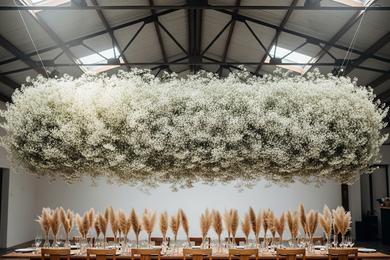
This is where scale matters. A small centerpiece gets swallowed by a warehouse. You need height. Tall, structural greenery or Hanging Floral Installations suspended from the trusses draw the eye upward and fill the negative space. Think overflowing eucalyptus, suspended amaranthus, or even dried pampas grass for texture.
Frequently Asked Questions
Concrete bounces sound. To combat this, you need soft goods. Rugs under lounge areas, velvet tablecloths, and heavy drapes all act as sound absorbers. Consult with your DJ about bringing additional speakers to distribute sound evenly rather than blasting it from one corner.
It can be. Older factories often lack insulation. Always ask the venue manager about their HVAC capabilities specifically for the season of your wedding. You may need to budget for portable heaters or industrial fans.
Rarely. Most historical venues prohibit drilling. You will need to rely on clamping systems or freestanding structures. Always check the contract before planning a heavy installation.
About the Author