What to Write: The Designer's Guide to Wedding Sign Wording
Less is More: A Design Perspective
In my 12 years of running the Chicago Factory production floor, I reviewed thousands of vector files for wedding signage. The most common mistake I saw wasn't a typo—it was overcrowding. When you are designing for a large-scale format like a 24x36" welcome sign, negative space is just as important as the text itself.
Typography is a texture. In an industrial setting, where we balance raw brick with sleek materials, the words you choose need to be concise to maintain that modern, "Industrial Romance" aesthetic. You don't need a paragraph to welcome your guests; you just need the right hierarchy.
The Welcome Sign
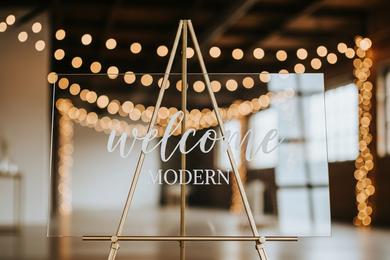
This is the first tactile moment of your event. It sets the tone. While traditional wording is timeless, modern lofts often call for something punchier.
The Classic Approach
- "Welcome to the Wedding of [Name] & [Name]"
- "Welcome to the beginning of our forever"
- Design Note: Always include the date. It turns the sign into a keepsake.
The Modern Minimalist
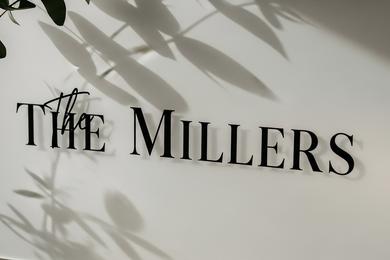
- "The Millers | Est. 2025"
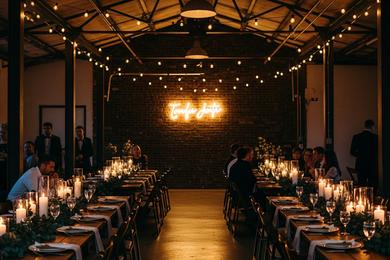
- "Let's Party" (Best for neon or bold sans-serif fonts)
- "Welcome / 10.24.25"
If you are using a transparent material, brevity is key for readability. See our guide on Acrylic Welcome Signs for examples of how text density affects legibility on clear surfaces.
Seating Charts & Escort Displays
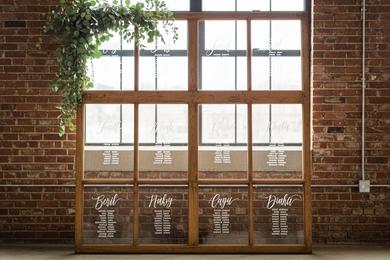
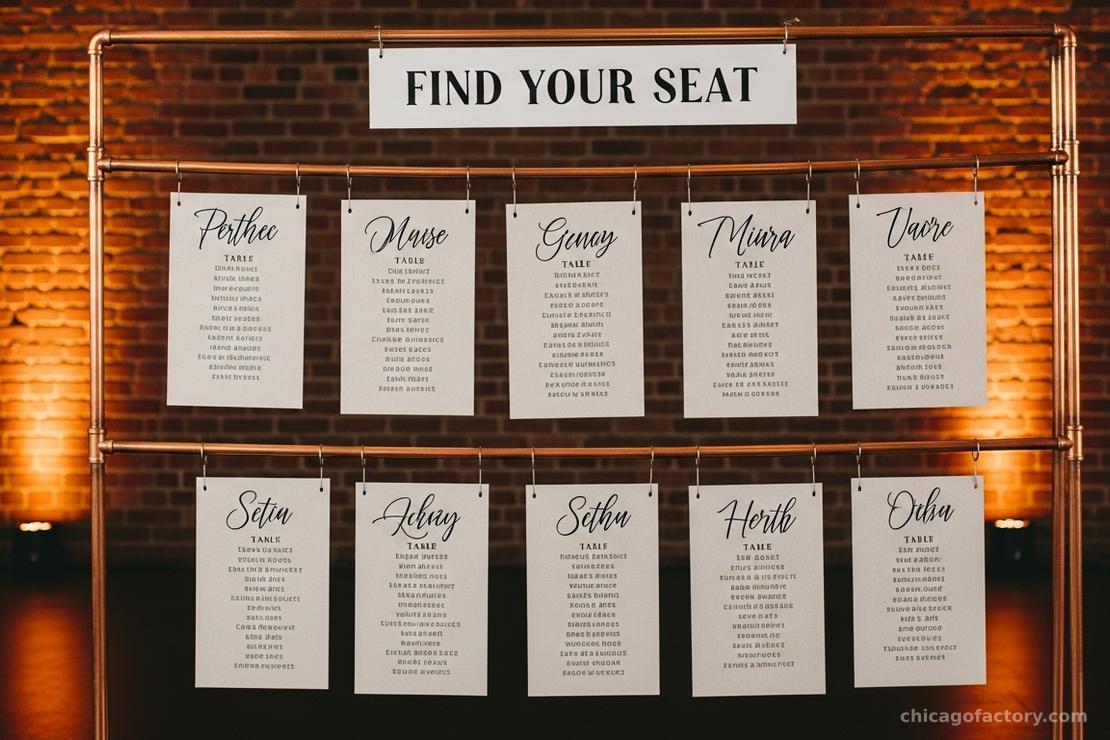
The header of your seating chart is functional, but it’s also an opportunity to be playful. However, structural integrity dictates how much text you can fit. If you are listing 200 names alphabetically, keep the header short.
- Formal: "Please Find Your Seat"
- Casual: "Your Seat awaits"
- Playful: "Come Sit With Us" or "Be Seated"
Pro-Tip: If you are opting for a massive architectural installation for your seating chart, the layout of the names matters more than the title. We explore different structural layouts in Seating Chart Ideas.
The Bar Menu
Alcohol service requires clarity. In a dim warehouse venue, guests don't want to squint at a poem to figure out if you have vodka.
- Title: "The Bar," "Libations," or "Sip & Savor."
- Signature Drinks: Give them names, but list the ingredients clearly underneath in a smaller sans-serif font.
- The Disclaimer: If you are having an open bar, a simple "Tonight's drinks are on us" suffices.
The Unplugged Ceremony
This is often the hardest sign to write because you want to be polite but firm. From a layout perspective, I prefer icons (a camera with a slash through it) combined with minimal text.
- "Unplugged Ceremony. We invite you to be fully present."
- "No Photos Please. We have hired professionals."
Neon Signage
Because neon tubing has physical limitations regarding how tight the curves can be, short phrases are mandatory. A neon sign is an art piece, not an instruction manual.
- "Better Together"
- "Crazy in Love"
- "The [Last Name]s"
Learn more about the technical constraints of bending light in our feature on Custom Neon Decor.
Frequently Asked Questions
Only on signs you intend to keep as keepsakes (like the Welcome Sign). Functional signs like "Cards & Gifts" or the Bar Menu do not need the date; keeping them generic allows you to resell them to other couples or reuse them for future parties.
For a Welcome Sign, the names should be at least 3-4 inches tall to be readable from 10 feet away. For seating charts, names should never be smaller than 24pt font size.
Yes. Guests often overlook the book if not prompted. A small 5x7" sign saying "Please Sign Our Guest Book" or "Leave a Note for the Newlyweds" significantly increases the number of signatures you receive.
About the Author